A perfect 3-day Luxor for first-time travellers
Three days in Luxor, planned hour by hour. The east bank temples, west bank tombs, and the one site most first-time visitors miss.

Egyptologist Tour Guide, Luxor
Published: · Last updated · 9 min read
Why three days is the sweet spot (not two, not four)
Two days covers the main sites but leaves no margin for depth or lingering
Three days allows the east bank and west bank to each have a proper morning start, with a third day for the sites most first-time visitors don't reach but should
The third day is also the day when guests start asking the questions they didn't know they had on Day 1
Cross-reference: /journal/how-many-days-luxor for the full duration analysis
Day 1: East bank — the architecture of civic religion
06:00 arrival at Karnak before the coach groups — two hours in the Hypostyle Hall, Sacred Lake, Festival Hall; the morning is the reason for the 06:00 start
10:00 break — return to hotel; rest through the heat of midday; Luxor has excellent air-conditioned cafés; this break is not optional if Day 2 is the west bank
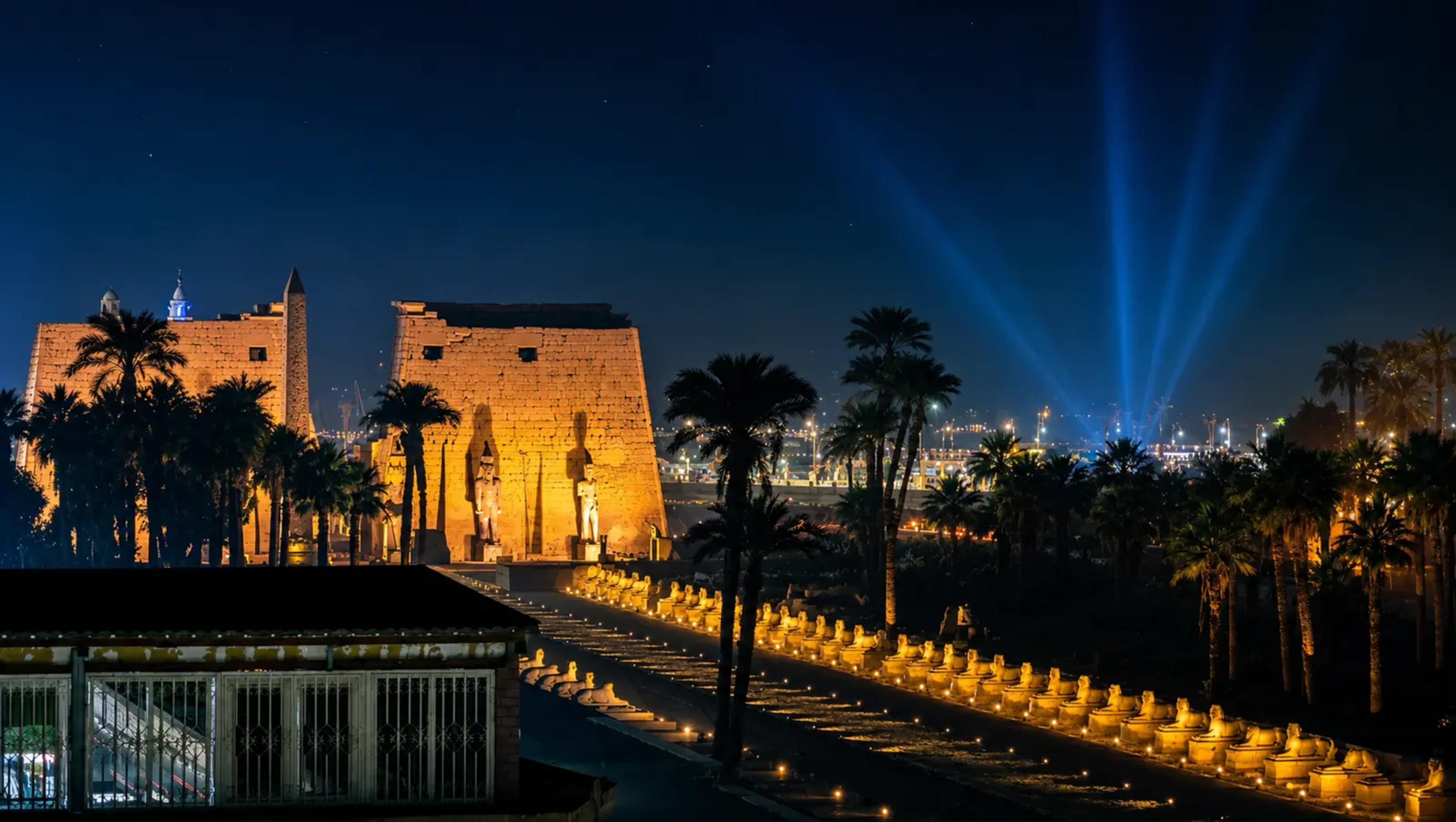
15:30 — Luxor Temple — the afternoon light falls directly on the granite colossi of Ramses II; the lone obelisk against the sky; the colonnade of Amenhotep III; the Roman fresco layer in the innermost sanctuary
17:30 — the Avenue of Sphinxes — the northern section (Karnak-facing) is the right view at dusk; the sphinxes receding into the evening light
Evening — dinner on the east bank; the corniche at night is the best free show in Luxor
Photo priority: Hypostyle Hall light shafts at 06:30; Luxor Temple colossi at 15:30; the obelisk at 17:00
Day 2: West bank — the other side of the river
06:00 departure, ferry crossing — the Nile in the early morning; the west bank fields before the sun is up
06:30–09:30 — Valley of the Kings — three tombs; KV9 (Ramses VI) for the astronomical ceiling; KV62 (Tutankhamun) for the historical weight; one tomb chosen based on what's currently open and what the guest is most drawn to from Day 1's east bank context
09:30 — Colossi of Memnon — 20 minutes; the scale conversation; the acoustic phenomenon at dawn
10:00–12:00 — Hatshepsut Temple at Deir el-Bahri — the terraces in late morning light; the Punt expedition reliefs; the erasure marks
12:00–14:30 — long lunch — the west bank has traditional restaurants and local home-kitchen options; a real meal, not a rushed tourist stop
14:30–16:30 — Medinet Habu — the afternoon light on the First Pylon; the Sea Peoples reliefs; the best-preserved interior in the west bank; not on most two-day itineraries but it anchors the late afternoon perfectly
Photo priority: Valley cliff at dawn; KV9 astronomical ceiling; Hatshepsut terraces at 10:00; Medinet Habu pylon at 15:00
Day 3: Depth — the places first-timers don't reach
Day 3 design philosophy: no specific must-see obligations; the day should serve what the first two days surfaced as the guest's actual interest
Option A — The Nobles' Tombs (TT1 area, Qurna): the private tombs of officials, viziers, and priests; the biographical and daily-life scenes absent from royal tombs; the social texture of New Kingdom Luxor visible in a way that royal monuments do not provide
Option B — Deir el-Medina (workers' village): the community of artisans who built the Valley of the Kings tombs; their own small but exquisitely painted tombs; the administrative papyri found at the site; this is the human interior of the valley story
Option C — Luxor Museum + Valley of the Queens: the Luxor Museum is air-conditioned, small (30–45 minutes), and curates the best single selection of New Kingdom artefacts in Luxor; pairing it with the Valley of the Queens (QV66 if arranged in advance) makes a coherent day that works in heat
Option D — A single site in depth: return to Karnak for a second dawn session with a different focus; or spend three hours at Medinet Habu with the scholarly notes in hand; the specialist guest who wanted to go faster on Day 2 now has their day
Photo priority: Day 3 is often the photography day — the Day 1 and Day 2 golden hour sessions are complete; Day 3 can be blue-hour focused or interior-focused depending on the guest's output from the first two days
The logistics that make three days work
Accommodation: east bank hotels are the logistical anchor (ferry access to west bank is 5–10 minutes from the corniche); I recommend staying in one place for all three nights
Vehicle: private car and driver for all three days; the west bank is not navigable efficiently on foot or by local tuk-tuk given the distances between sites
Start times: 06:00–06:30 for Days 1 and 2 is non-negotiable for the quality of experience this itinerary describes; Day 3 can be a later start if the guest is tired
Water and heat management: I carry water; midday breaks are structural, not optional; the 3-day itinerary is designed so that the hardest walking is always in the first three hours before the valley heats
A note on customization
This three-day outline is a default — not a script; what it produces depends on the guest
A guest who wants to spend both mornings of Days 1 and 2 at Karnak and skip the Valley entirely has the right guest for the Specialist Day; this itinerary serves the first-time visitor
Guests with mobility concerns, children, or very specific interests: the custom inquiry form is the right next step
Cross-reference: /tours/custom
Related
Tour cross-link: Two-Day Luxor → /tours/two-day-luxor — the structured itinerary for guests who want two days with a guide
Tour cross-link: Custom Itinerary → /tours/custom — for guests who have read this and want a different Day 3
Encyclopedia cross-link: Valley of the Kings → /luxor/valley-of-the-kings — the site that anchors Day 2 morning
Encyclopedia cross-link: Karnak Temple → /luxor/karnak — the site that anchors Day 1 morning
About cross-link: /about