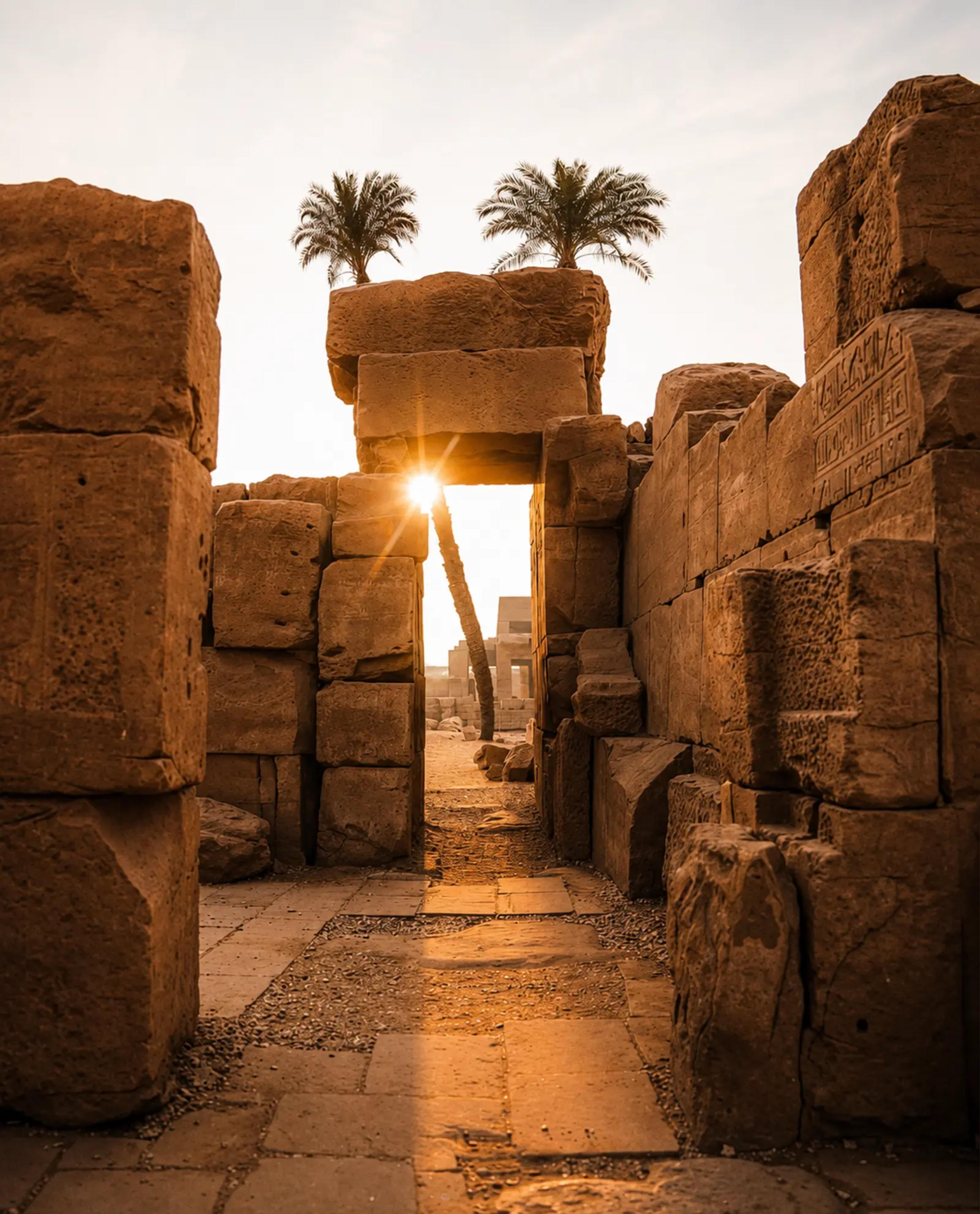
Karnak before the buses
Karnak at 06:00 is a different place. Here is exactly how to plan an early-morning visit before the group tours arrive.

Egyptologist Tour Guide, Luxor
Published: · Last updated · 7 min read
What Karnak looks like at 06:00
The access road from Luxor's east bank to the main entrance: quiet, morning vendors just setting up; the sphinx avenue at dawn is empty except for security
The main entrance opens before most tourists arrive; the processional way from the first pylon to the second is walkable before the audio-tour groups form
The Hypostyle Hall at first light: light from the east enters through the clerestory windows and strikes the northwest columns at a low angle — this is the angle that makes the carved relief surfaces readable; the shadows define the hieroglyph edges and the figural reliefs in a way that midday flat light erases
My own arrival time: 06:10–06:15 minimum; the light is at its best before 07:00; by 07:30 the first coach groups begin arriving
Why the light matters more here than at any other site
The Hypostyle Hall columns are 21 metres tall; the relief carving runs top to bottom; the lower half is always in relative shadow during midday
Morning raking light from the east reaches the column bases; you can read the figures at eye height and trace the cartouches with clarity
The northern section (Seti I) vs. the southern section (Ramses II): the stylistic difference — finer relief vs. bolder cuts — is only legible when the shadows cooperate
Photography: the beam-of-light effect through the clerestory gaps is only available at 06:00–07:30; by 08:30 the hall is fully lit from above and the drama disappears
What is open early that most visitors miss
The Precinct of Amun-Ra outer courts: accessible with the main ticket; usually quiet early because most guided tours enter directly to the Hypostyle Hall
The Festival Hall of Thutmose III (Akh-menu): behind the main axis; the unique tent-pole columns and the botanical room; I find this area almost empty even at 09:00, but arriving early guarantees it
The Precinct of Mut (south entry, sometimes requires walking around): the hundreds of black granite Sekhmet statues are more accessible and more photogenic before the sun is fully overhead
The Sacred Lake at dawn: the reflection of the Second Pylon in still water; the light is flat enough for reflections before 08:00; this is often the cleanest shot available at Karnak
What crowds actually do to the experience
Group-tour dynamics: audio tours and multilingual group guides compress into the same corridor spaces; 50-person groups at the base of the same column create a physical and cognitive crowd that makes sustained looking impossible
The acoustic effect: the Hypostyle Hall has a distinctive echo when empty; the scale becomes audible; you hear your own footsteps against the stone floor; this is erased when 200 people are present
Structured looking: I stop at specific column pairs and ask guests to compare Seti I's hand against Ramses II's — this requires enough silence to point and pause; this conversation is possible at 06:30 and impossible at 10:00
The honest timeline for what is possible
06:00–06:30: Processional way, ram-headed sphinxes, approach to the First Pylon; almost empty
06:30–07:45: Hypostyle Hall — the 75-minute deep dive I structure the East Bank Day around; all 134 columns, the stylistic comparison, the clerestory light
07:45–08:15: Sacred Lake, granite scarab, overview of the precinct from the lake perimeter
08:15–09:00: Festival Hall of Thutmose III, botanical room, return via the southern courts
09:00+: Coach groups have arrived; this is when a short visit starts — and when an early start has already given you what they will not get
What you see between 09:00 and 11:00 is technically the same temple; it is experientially a different place
A note on the Sound & Light show
Karnak operates an evening Sound & Light programme; the site is lit with coloured floodlights and a recorded narrative plays over loudspeakers; this is a different register entirely from what I describe here
I do not include the Sound & Light in any standard tour; if a guest specifically requests it as an evening event, I note the experience beforehand: the archaeological site and the Sound & Light are best understood as separate things
Related
Tour cross-link: East Bank Day → /tours/east-bank-day — the tour built around the pre-09:00 start time this article describes
Encyclopedia cross-link: Karnak Temple → /luxor/karnak — the full site guide
About cross-link: /about